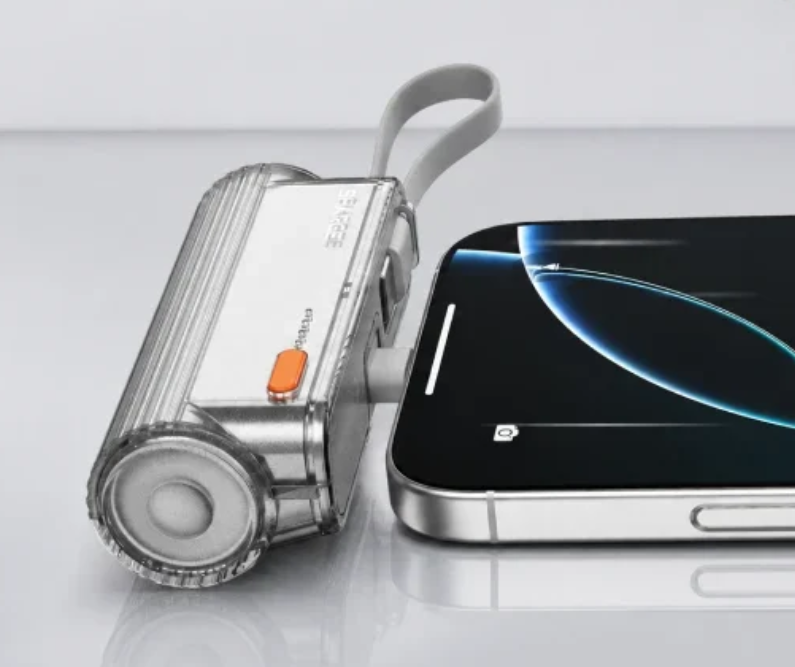
Charging has become one of those everyday routines that most people rarely think about—until something goes wrong.
A phone reaches 10% before a long commute. A laptop needs power just before an important meeting. A cable disappears into the bottom of a backpack. A bulky charger occupies an entire corner of a desk. Then there is the familiar collection of adapters, power banks and tangled wires that seems to grow every time a new device enters our lives.
SHARGE approaches this familiar problem from a different perspective.
Rather than treating chargers and power banks as purely functional accessories, the brand combines power delivery with compact engineering, distinctive industrial design and practical details intended to simplify modern device life. Its current catalog covers power banks, chargers, cables, accessories and portable data-storage solutions, giving the company a broader role in the personal-tech ecosystem.
The result is a collection of products that often look less like conventional charging accessories and more like carefully designed pieces of personal technology.
When Charging Accessories Become Part of the Design
Most charging products are designed to disappear.
SHARGE seems to believe they can do the opposite.
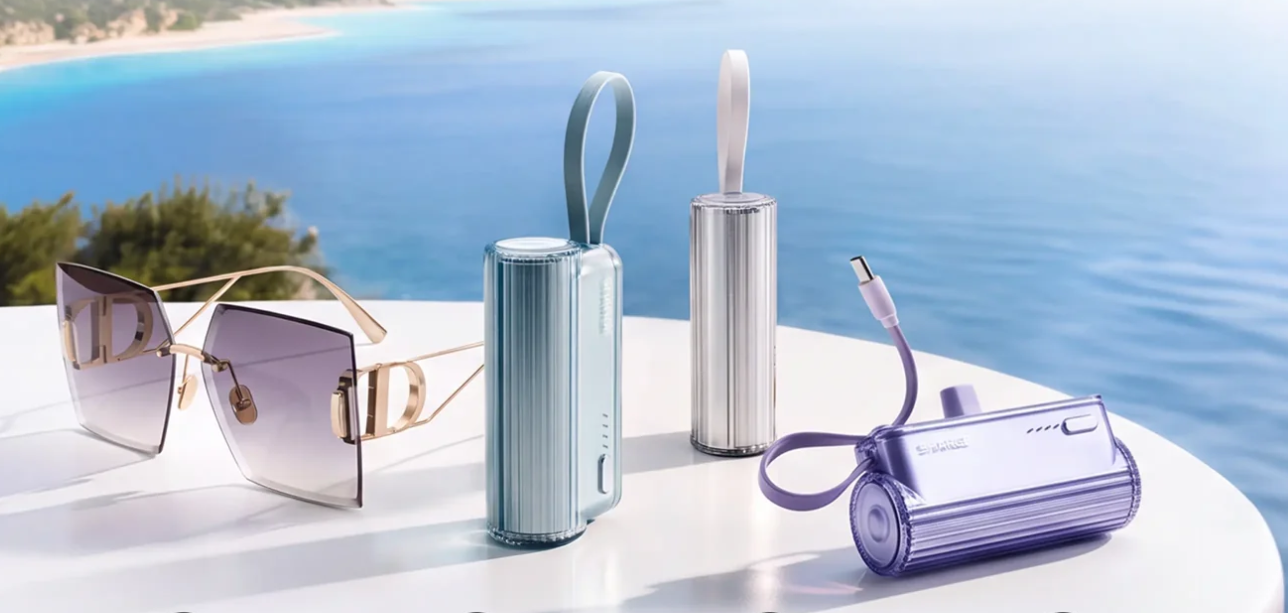
Transparent housings, dot-matrix displays, retro-inspired shapes, visible internal components and unusual form factors appear throughout the company’s lineup. SHARGE describes its aesthetic as a combination of transparent design, retro-futuristic styling and a cyberpunk-inspired visual identity.
This approach is particularly noticeable in products such as the Retro 67 charger and the Shargeek series.
Instead of hiding every component behind a featureless plastic shell, SHARGE often makes the technology itself part of the visual experience. For people who enjoy mechanical keyboards, transparent electronics or distinctive desktop accessories, this can make an otherwise ordinary charger feel more personal.
It also reflects a broader change in consumer technology.
People increasingly carry their chargers everywhere, so these products are no longer purely invisible infrastructure. They sit on desks, appear in travel photos and become part of everyday carry.
Why shouldn’t they look interesting?
A Power Bank Doesn’t Have to Be Boring
Power banks are one of SHARGE’s strongest categories.
The company’s current range includes compact models such as the Flow Mini 2, magnetic wireless options such as the ICEMAG series, higher-capacity models including the Shargeek 170 and Shargeek 300, and other designs aimed at different travel and everyday-use situations.
The interesting part is not simply the number of products.
It is how differently SHARGE approaches the idea of portable power.
For someone who wants something small enough for a pocket, a compact power bank makes sense. For a traveler carrying several devices, higher output and larger capacity become more important. For smartphone users who prefer wireless charging, a magnetic power bank can reduce the need for cables.
Instead of assuming that everyone needs the same battery pack, SHARGE builds several solutions around different habits.
That makes the category much more personal.
ICEMAG: Where Cooling Meets Wireless Charging
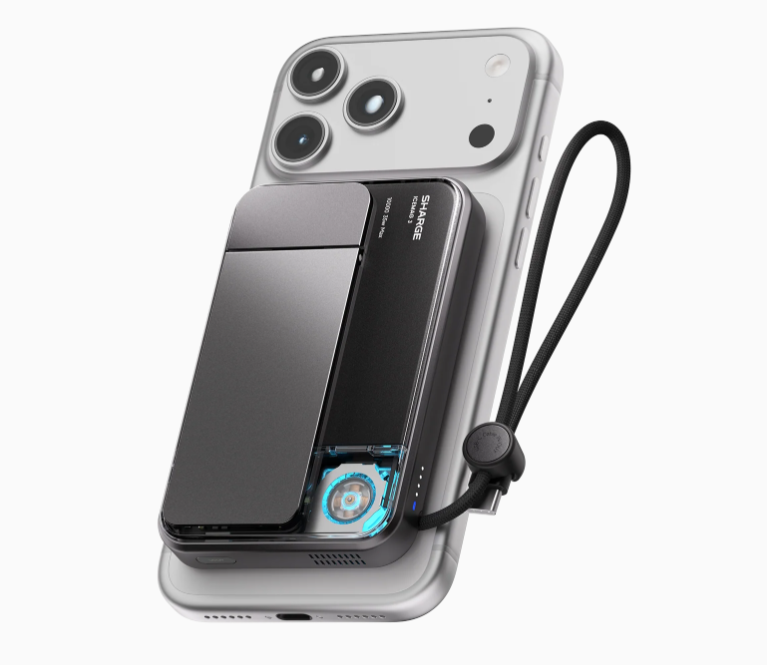
The ICEMAG family demonstrates SHARGE’s willingness to experiment with charging hardware.
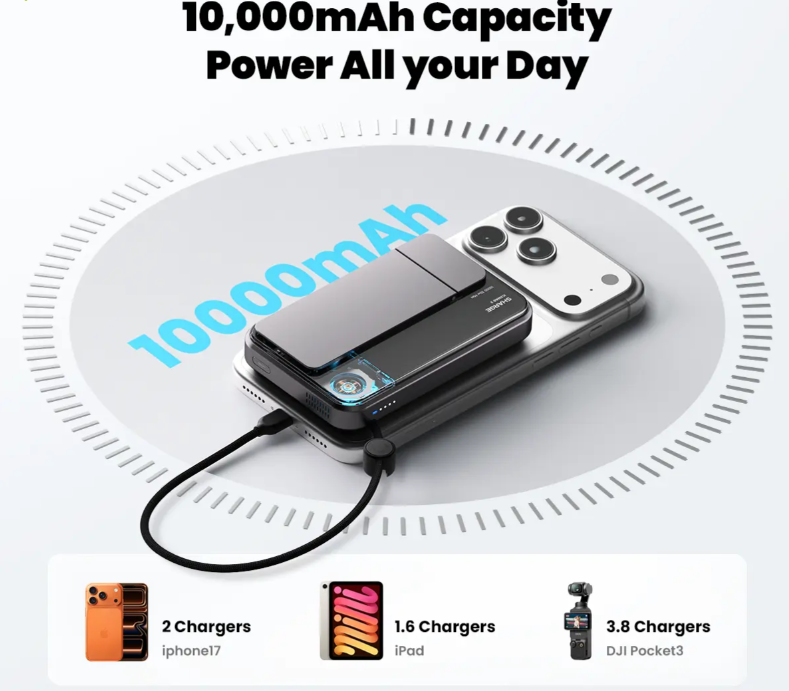
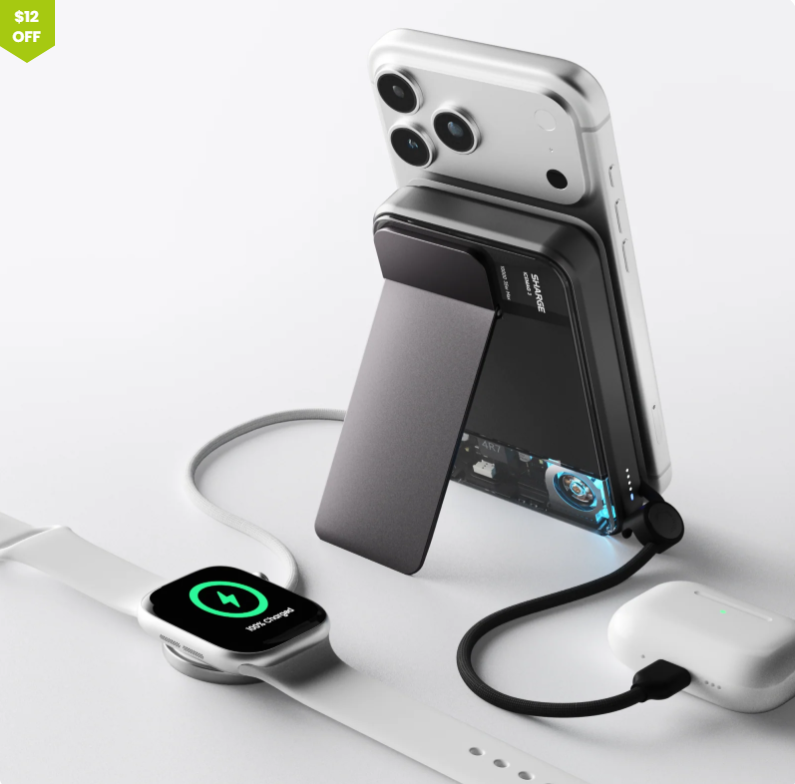
The ICEMAG 2 combines a 10,000mAh battery with 30W charging, Qi2 wireless charging at up to 15W and active cooling.
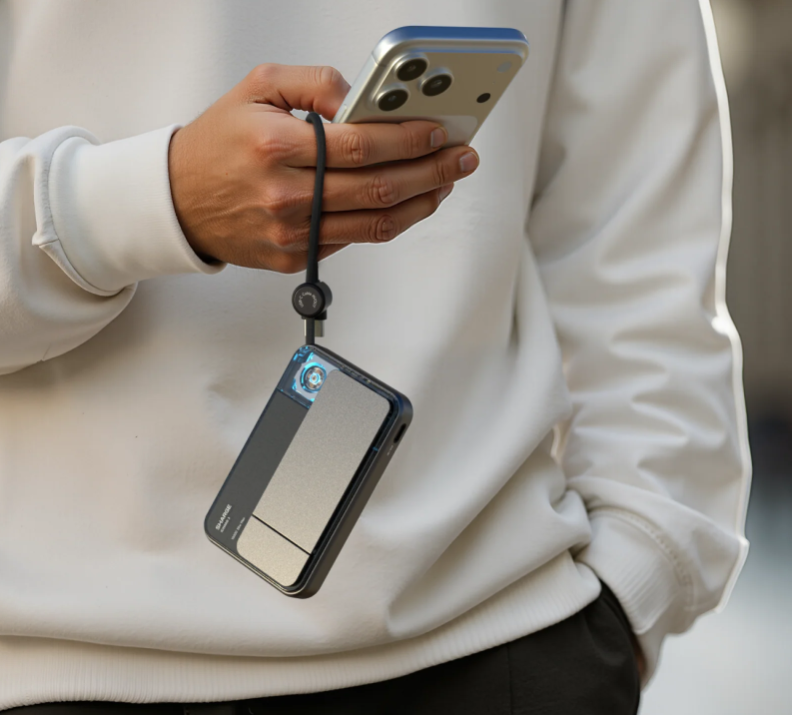
The newer ICEMAG 3 pushes the concept further. SHARGE currently describes it as a 10,000mAh power bank with 35W USB-C charging, Qi2.2 wireless charging up to 25W, a built-in cable and active cooling.
Why add active cooling to a power bank?
Because faster charging can generate heat, and thermal management becomes increasingly important as power delivery gets more demanding.
The cooling system gives the ICEMAG series a distinct identity. It is not simply a battery with a USB port; it is a small piece of power electronics designed around the relationship between speed and temperature.
For users who spend long days away from a wall outlet, this kind of engineering can be particularly useful.
Shargeek 170: Power for a Bigger Device Mix
Not everyone needs a tiny battery.
If you travel with a phone, tablet, camera, handheld gaming device and laptop, the charging requirements can quickly become more complicated.
That is where a higher-output power bank becomes useful.
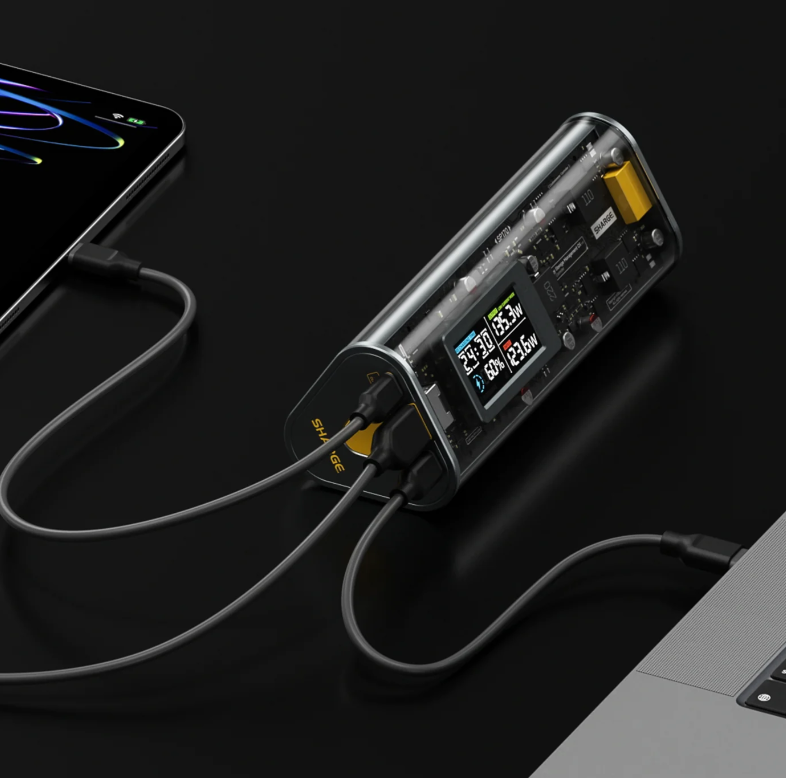
The Shargeek 170 is listed with a 24,000mAh capacity and up to 170W of power output.
The appeal is less about carrying the smallest possible battery and more about consolidating power for a larger collection of electronics.
For digital nomads, photographers, remote workers and frequent travelers, this can change the way a bag is organized. Instead of carrying several separate batteries for different devices, one high-capacity power source can become the central part of a portable charging setup.
Of course, users should always check their individual device requirements, airline rules and the power bank’s current specifications before traveling.
But the underlying idea is compelling: portable power should be designed around the way people actually carry technology.
Discho: Solving Several Charging Problems at Once
One of the most unconventional products in SHARGE‘s current catalog is the Discho.
It combines three functions into one device: a 10,000mAh power bank, a 30W GaN wall charger and a 2.3-foot built-in retractable cable. It also includes a dot-matrix display and an intelligent overnight charging feature.
The concept addresses a familiar travel problem.
Imagine packing for a weekend trip.
You need a wall charger. You need a power bank. You need a USB-C cable. You might also need to remember where you put each of them.
Discho attempts to reduce that list to one device.
Its retractable cable is particularly practical because it eliminates one loose cable from the travel bag. The integrated design also means the device can function as a wall charger when an outlet is available and as a battery when it is not.
This is a good example of SHARGE’s broader design philosophy: rather than making each accessory independently better, combine functions when doing so can make the overall experience simpler.
Fast Charging Without a Desk Full of Adapters
Power banks are only one part of the charging equation.
SHARGE also offers dedicated chargers, including the Pixel 100/140, 140W PD 3.1 charger, Retro 67, Retractable 65 and Air Charger.
The 140W PD 3.1 model is particularly relevant for people who want higher-power charging from a compact wall adapter. Meanwhile, the Pixel 100/140 series combines high charging output with a dot-matrix display, continuing SHARGE’s habit of making technical information visible rather than hiding it.
For everyday users, multi-port charging can also simplify the desk.
Instead of filling several outlets with separate adapters, one multi-port charger can become the central power station for a phone, tablet, earbuds or other USB-powered devices.
That may sound like a small improvement, but reducing small points of friction is exactly where good accessory design can make a difference.
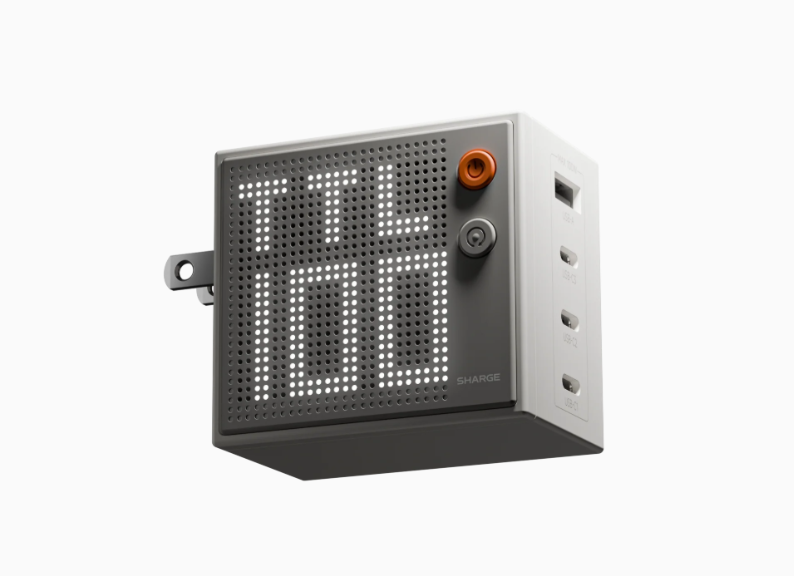
Retro 67: A Charger With Personality
The Retro 67 takes another route.
Rather than presenting itself as a generic charging block, it adopts a retro-inspired aesthetic while providing 67W charging through three ports. SHARGE also highlights real-time LED power display functionality as one of its distinctive charging features.
The visual language is important here.
A charger is normally something you throw into a bag and forget about. A retro-style charger can instead become part of a workspace.
For users who spend hours at a desk, design details can influence how a workspace feels. A charger with a recognizable appearance can sit alongside a laptop stand, mechanical keyboard, speakers and other accessories without looking completely out of place.
In that sense, SHARGE is not merely selling power.
It is selling a particular attitude toward technology.
Cables Matter More Than We Usually Admit
The humble charging cable is often the least exciting part of a setup, but it can also be one of the most frustrating.
A poor-quality cable can become stiff, tangled or unreliable. A cable that is too short limits movement, while an excessively long cable creates unnecessary clutter.
SHARGE‘s cable collection includes products such as the MagLoop C-to-C Cable, 240W C-to-C Cable, Phantom C-to-C Cable, Retro C-to-C Cable and Capsule Cable.
The company’s approach is consistent with its chargers and power banks: even small accessories are given a recognizable design language.
For users building a complete charging setup, matching the cable with the charger and power bank can make the entire collection feel more intentional.
SHARGE Is Also Exploring Portable Data
One of the more interesting developments in SHARGE’s current catalog is its move beyond charging.
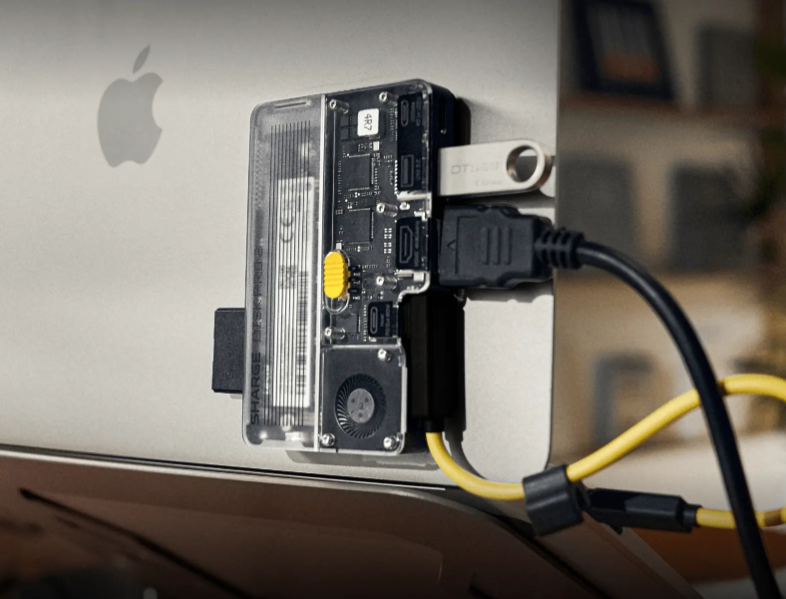
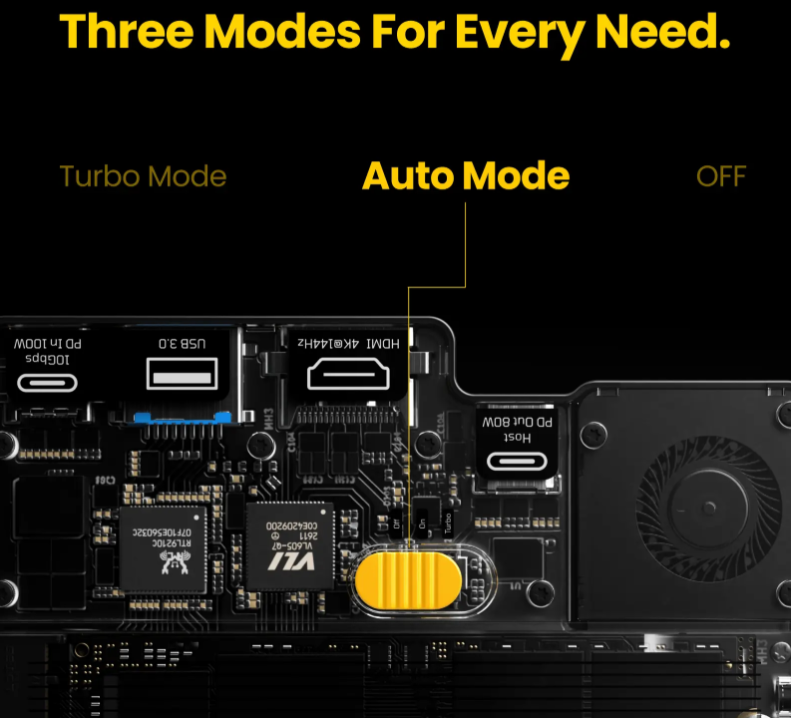
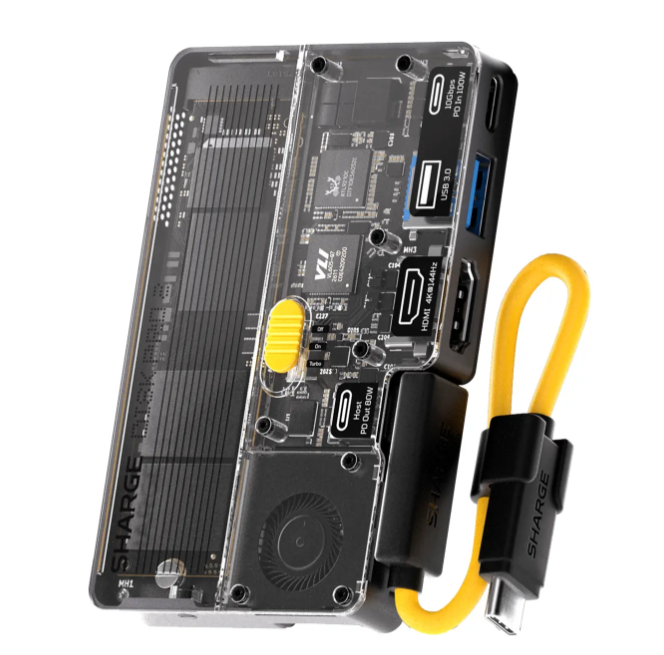
The brand now offers portable data-storage products under the Disk and Disk Pro lines. The Disk Pro is positioned as a portable solid-state drive combined with a multi-port hub, rather than simply being an external drive.
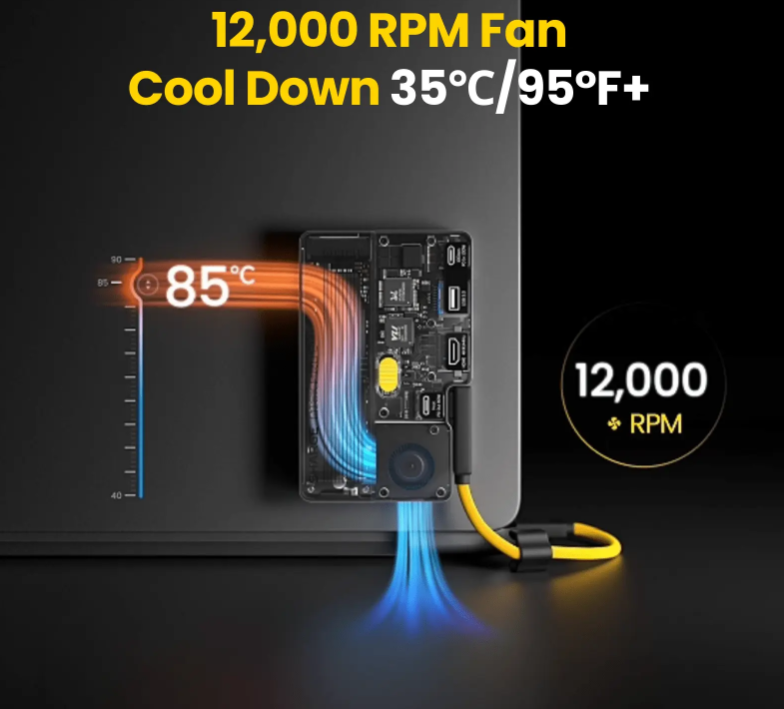
According to SHARGE, Disk Pro offers transfer speeds of up to 10Gbps, a 5-in-1 hub design, up to 4TB of NVMe storage and active cooling, while weighing approximately 150 grams.
This is a logical extension of SHARGE’s product philosophy.
Modern mobile work is not only about keeping devices charged. People also need to move photographs, videos, documents and other large files between devices.
A compact storage solution that doubles as a connectivity hub can therefore solve another piece of the portable-work puzzle.
It suggests that SHARGE’s long-term direction may be broader than charging alone.
Building a More Organized Travel Kit
One of the biggest strengths of SHARGE’s ecosystem is the possibility of combining products.
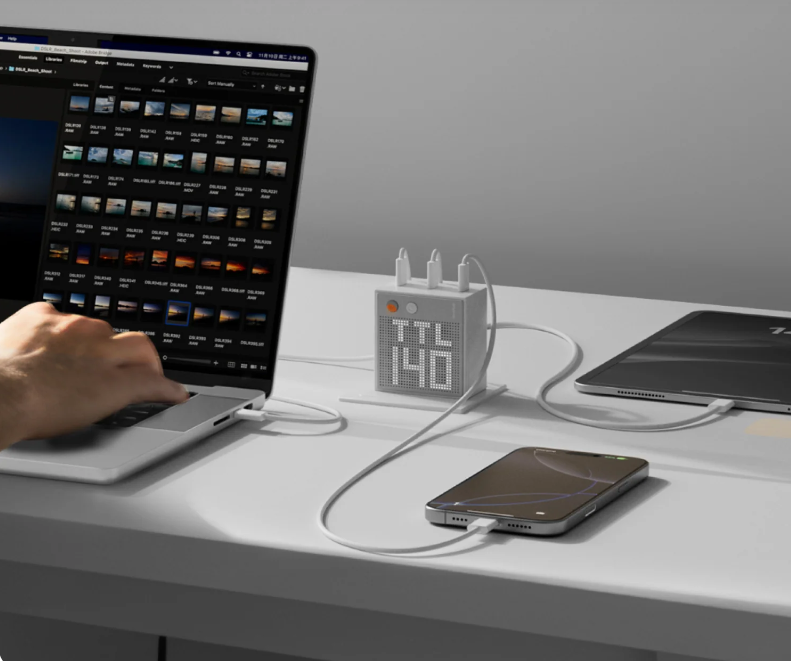
A traveler might pair a high-capacity power bank with a compact wall charger and a multi-purpose cable. Someone working remotely might prefer a high-output charger, portable SSD and power bank. A smartphone-focused user might choose a magnetic battery and small charging adapter.
The brand’s website reflects this approach through dedicated collections such as “On the go,” “Everyday use,” “EDC Power Bundle,” “High capacity,” “Desk Charging Bundle” and other curated categories.
This way of organizing products is useful because it shifts the question from “Which charger should I buy?” to “What kind of setup do I actually need?”
That is a much more practical starting point.
Design as a Form of Everyday Convenience
It is tempting to think of design as purely cosmetic.
For SHARGE, however, many design choices have a functional purpose.
A built-in cable means one less loose accessory.
A magnetic power bank can reduce cable dependence.
A display can provide information at a glance.
Active cooling can address heat during higher-power charging.
A compact GaN charger can reduce the amount of space required in a travel bag.
A multi-port hub can reduce the number of adapters needed.
These details may appear unrelated, but together they point toward one idea: good charging equipment should reduce friction rather than create more of it.
That is perhaps the most valuable lesson behind the SHARGE product range.
Who Is SHARGE Designed For?
SHARGE is likely to appeal most strongly to people who see technology as part of their everyday lifestyle rather than something purely utilitarian.
That includes frequent travelers, remote workers, content creators, students, gamers, gadget enthusiasts and anyone who regularly carries several electronic devices.
It can also appeal to design-conscious users who are tired of generic black plastic chargers.
However, SHARGE products are not necessarily about buying the most powerful option available.
The better approach is to match the product with the situation.
Someone who mainly needs to recharge a phone occasionally may prefer a compact 5,000mAh or 10,000mAh power bank. Someone carrying a laptop and several accessories may benefit from a higher-output model. A traveler who hates cable clutter might appreciate a product such as Discho. A desk-based user may prefer a multi-port charger or charging station.
In other words, the most interesting SHARGE product is not necessarily the most powerful one.
It is the one that eliminates a problem you encounter repeatedly.
Final Thoughts: Power Should Feel Effortless
Charging technology is easy to overlook because it is supposed to work quietly in the background.
But as people carry more electronics, the infrastructure surrounding those devices becomes increasingly important.
SHARGE recognizes this shift and approaches power accessories as a combination of engineering, portability and visual identity. Its current lineup ranges from compact power banks and magnetic wireless chargers to high-output batteries, GaN wall chargers, cables and portable storage solutions.
What makes the brand particularly interesting is not simply its charging speeds or battery capacities.
It is the attempt to rethink what these products should feel like.
A charger can be a desk accessory.
A power bank can be a pocket-sized piece of industrial design.
A cable can become part of an organized everyday-carry system.
And a portable SSD can combine storage with connectivity rather than functioning as a single-purpose device.
In a world where almost everything depends on a battery, the humble charging accessory deserves more thoughtful design than it usually receives.
SHARGE’s answer is to make that invisible part of modern life more powerful, more organized and, perhaps most importantly, more interesting to look at.
Sometimes innovation does not mean inventing an entirely new category.
Sometimes it means taking something we use every single day—and finally making it better.